

Prayer Room: Vastu Rules, Directions, and Harmony for Your Home Temple
Creating a prayer space at home is not merely about arranging idols and lighting a lamp. In Hindu tradition, a home temple is a powerful energy centre that influences peace, prosperity, and emotional balance. While many families place multiple deities together and worship them every day, spiritual texts and traditional scholars advise following certain guidelines. The placement of idols, their combinations, and the orientation of your puja room can significantly impact the spiritual vibrations within your home.
Below is a detailed, easy-to-understand guide on how to arrange idols correctly in the Puja room, avoid conflicting energies, and maintain a harmonious energy of the shrines.
Why Idol Placement Matters in Hindu Worship
Hinduism honours countless deities—each representing unique energies, virtues, and cosmic functions. When these energies are aligned properly, the home temple becomes a serene and powerful spiritual zone. However, when incompatible idols are placed together or when the shrine is cluttered, the flow of positive vibrations may diminish.
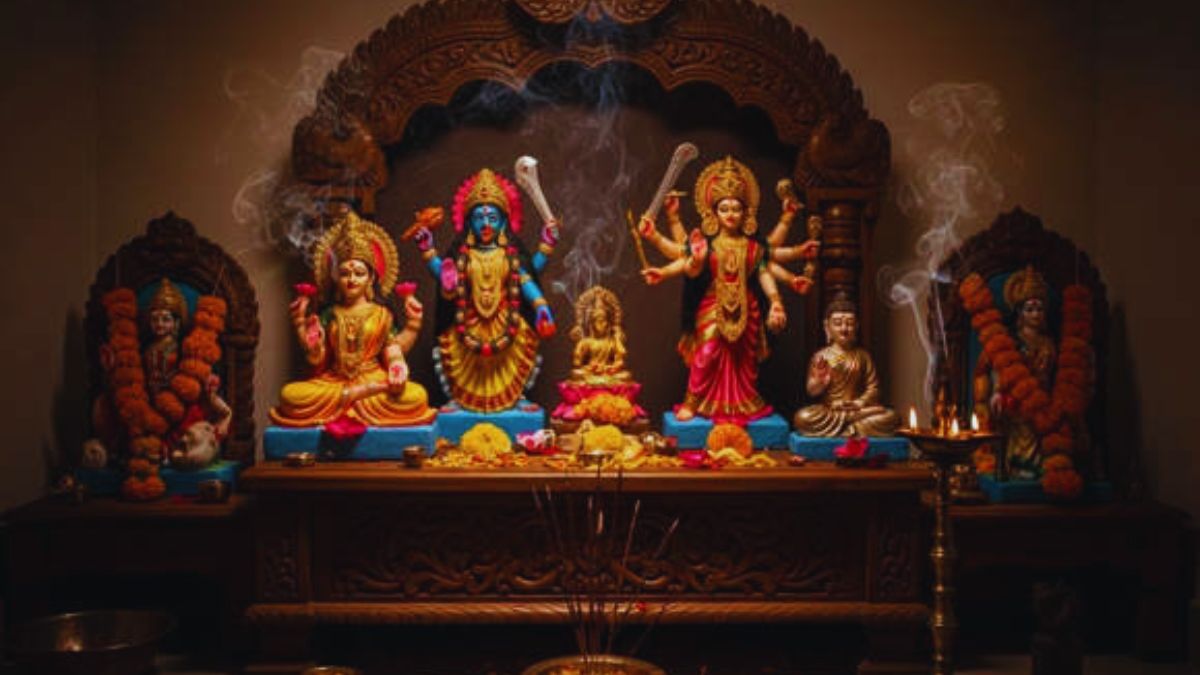
Correct idol placement ensures harmony, enhances meditation, improves concentration during prayer, and keeps the home environment spiritually elevated.
Idol Combinations to Avoid
1. Two Shiva Lingams in the Same Shrine
Traditionally, it is not recommended to keep two Shiva Lingams in one home mandir. Each Lingam is believed to hold a distinct energetic field. When more than one is placed in a small space, their vibrations may clash, creating imbalance instead of spiritual harmony.
- If multiple Lingams need to be preserved for personal reasons, they should be placed separately, not together on the same altar.
2. Lord Hanuman and Shani Dev Together
Lord Hanuman symbolizes strength, protection, and relief from planetary challenges.
Shani Dev, on the other hand, represents karma, discipline, and life lessons.
- While devotees often worship Hanuman to reduce the harsh effects of Shani’s influence—such as during Shani Mahadasha or Sade Sati—their idols should not be kept together.
- Their energies work in opposite ways: Hanuman calms and stabilizes, whereas Shani initiates karmic transformation.
- For this reason, if you choose to keep Shani Dev’s idol or image at home, it should be placed in a separate area and worshipped independently.
3. Multiple Idols of the Same Deity
Keeping several idols of the same God in one space is discouraged. Repetition can disturb the energy flow and create spiritual crowding.
- Selecting one primary idol or image for each deity helps maintain purity and clarity of focus in the shrine.

4. Fierce or Ugra Forms of Deities Placed Together
Gods depicted in fiery, intense, or wrathful forms – as Narasimha, Kali, or Rudra forms of Shiva—carry strong transformative energies.
- When these forms are placed next to each other, the combined vibration may feel overwhelming in a domestic setting. It is best to place them individually and give each form its own respectful space.
Directions and Placement for a Puja Room
1. Best Location: Northeast (Ishan Kon)
The northeast corner of the home is considered the most sacred direction for a prayer room. This area attracts divine energies and is believed to enhance spiritual growth. If the northeast is unavailable, east or north-facing walls are the next most favourable options.
2. Direction to Face While Praying
Devotees should ideally face east when offering prayers. Facing north is also acceptable. These directions symbolize light, knowledge, and positivity.
3. Idol Placement and Height
- Idols should be placed at least one inch away from the wall to allow airflow around them.
- Avoid oversized idols in home temples. The ideal height is between 4 and 9 inches.
- Every idol should face either east or west for optimal energy alignment.
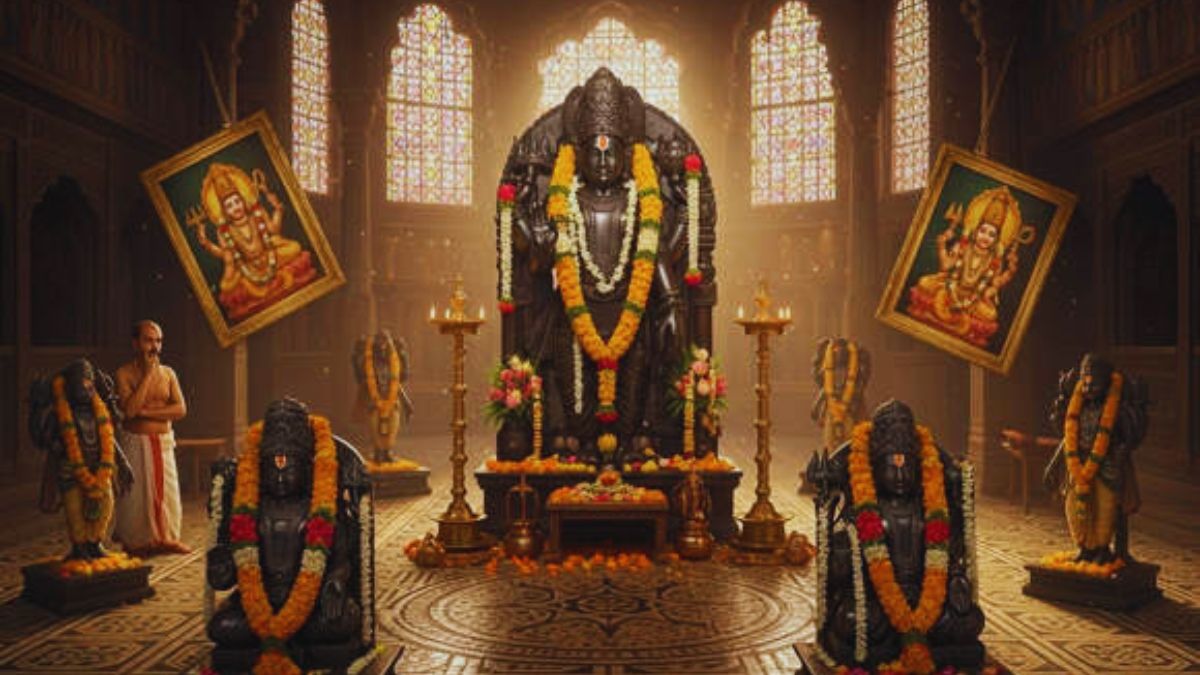
4. Never Keep Broken or Damaged Idols
Broken or cracked idols are considered inauspicious and should not be kept in the prayer room. If an idol breaks, it must be respectfully immersed or disposed of as per traditional customs.
Maintaining a Clean, Positive Home Temple
A clutter-free and peaceful shrine attracts positive energy. A well-maintained prayer (puja) room elevates and influences the emotional well-being of the entire household. Regular spiritual upkeep is essential:
- Clean idols and shelves frequently to prevent dust accumulation.
- Avoid overcrowding – each deity should have enough space.
- Use fresh flowers and replace them daily.
- Keep a lamp or diya lit whenever possible. The flame is believed to purify the surroundings and elevate spiritual vibrations.
- Store prayer books, incense, and accessories neatly.
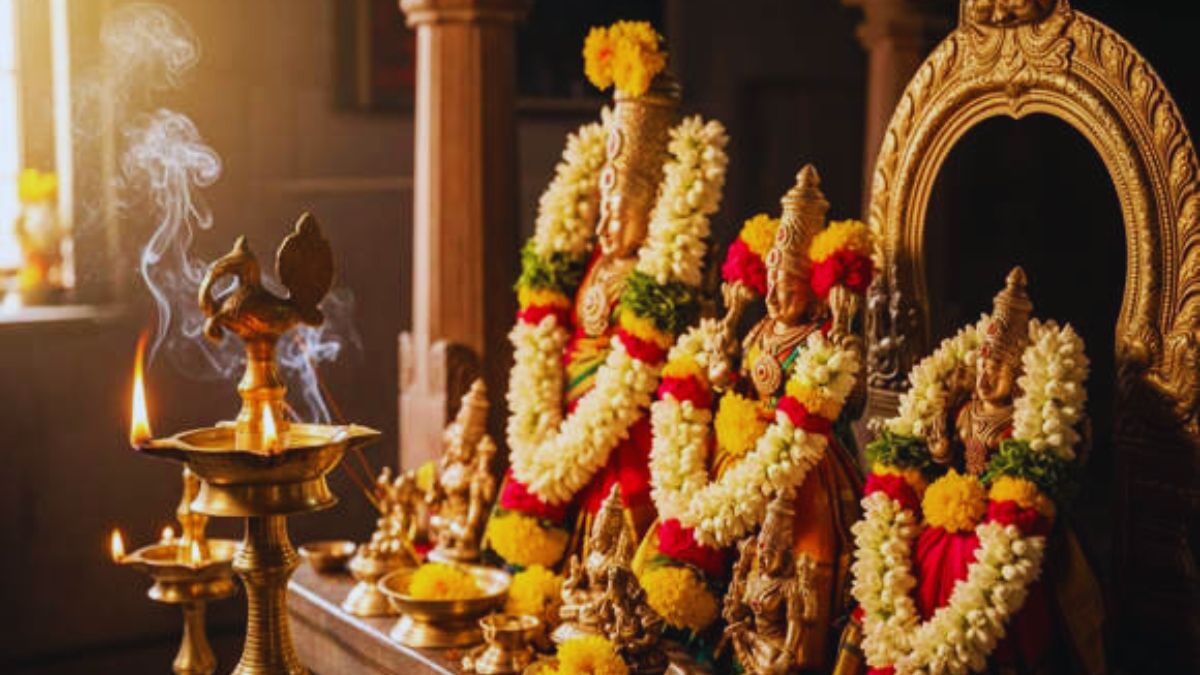
Arranging a home temple is an important responsibility. By following traditional guidelines on idol placement, direction, and cleanliness, you create an environment that supports devotion, peace and positive energy.
When your home temple’s energy is in balance, it becomes a space that uplifts everyone and a spiritual heart of the home.
Frequently Asked Questions (FAQs)
1. What is the best direction for setting up a prayer room at home?
The northeast corner is the most auspicious direction. If that is not possible, east and north are ideal alternatives for placing a home temple.
2. Is it right to place two idols together in the temple at home?
No, no two idols or two Shiva Lingams should be kept in the same shrine. The idols of Lord Hanuman and Shani Dev should not be placed together either, or fierce forms of deities should also be kept separately.
3. How big should the idols be for my home mandir?
Extremely large idols are not advisable. The ideal size should be between 4 – 9 inches, ensuring proper energy alignment and ease of maintenance.